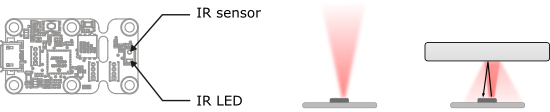
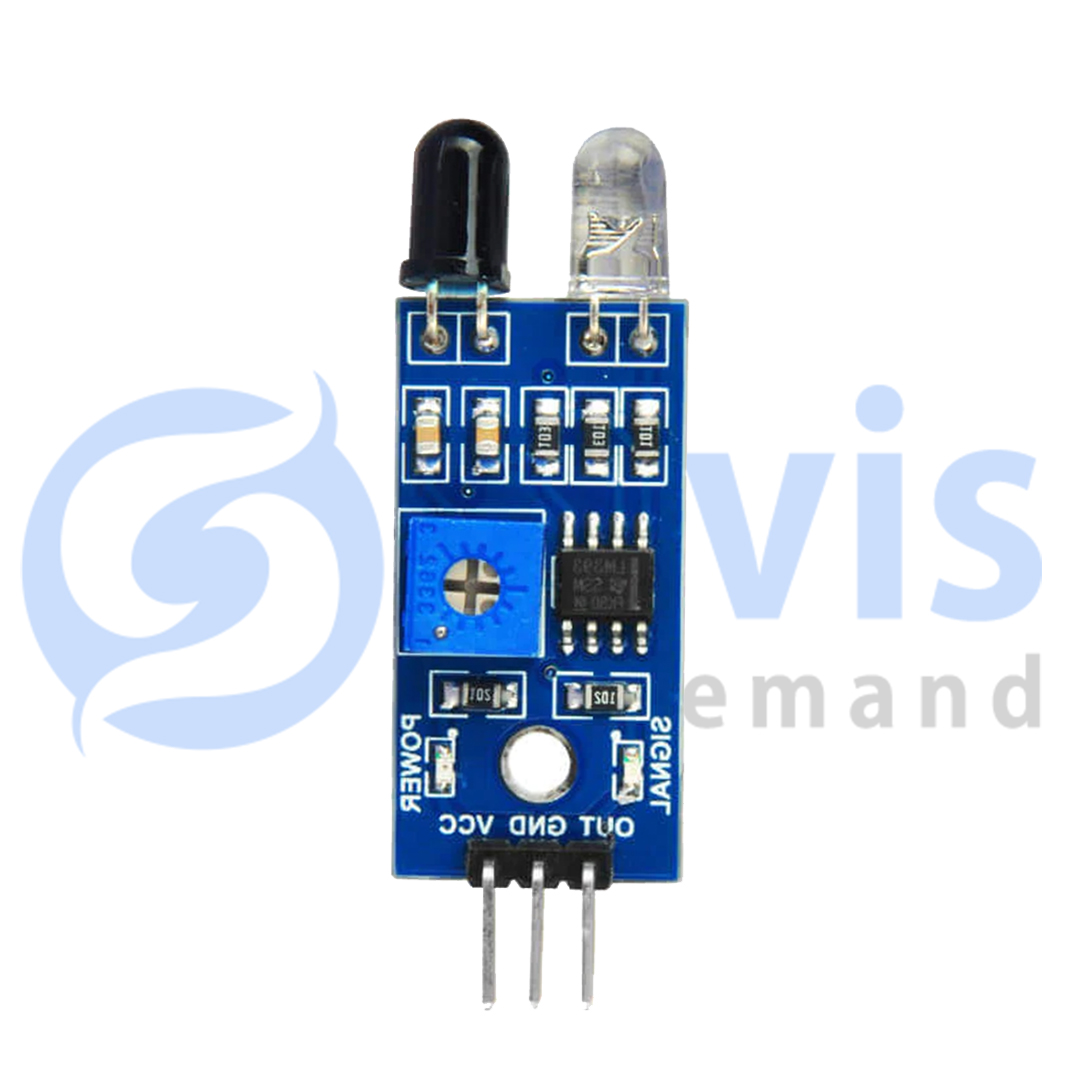
Using a proximity sensor behind a window Circuit Diagram VCC: Connects to a 5V or 3.3V or a microcontroller or a power supply. GND: Connects to ground. OUT: Digital output that goes HIGH or LOW based on obstacle detection. How the IR Sensor Works. The IR LED continuously emits infrared light. When an object comes into the range of the sensor, the infrared light reflects off the object and is detected by the photodiode. Infrared sensors are used in a wide range of applications including here proximity robotic applications for distance and object detection, or color detection and tracking. As a disadvantage, I have to mention that IR sensors have bad performance in strong sunlight and many applications where this type of sensor is used are designed for indoor use.
A tutorial on How to make an InfraRed (IR) proximity sensor circuit along with detailed explanation on how the circuit works. The sensitivity or Range of detection can also be controlled by adjusting the potentiometer. IR (InfraRed) proximity sensor / Obstacle detector circuit using LM358 opamp. LED chaser circuit / Sequential LED flasher

Comprehensive Guide to Using Sharp IR Infrared Distance Sensor ... Circuit Diagram
Overview. In this guide, we will explore the interfacing of an IR Sensor Module with an Arduino UNO R4 Minima Board. An IR (Infrared) Sensor Module is a device designed to detect infrared light, commonly used in remote control systems, proximity sensors, and line-following robots.. The IR Sensor Module typically includes an infrared transmitter and receiver.
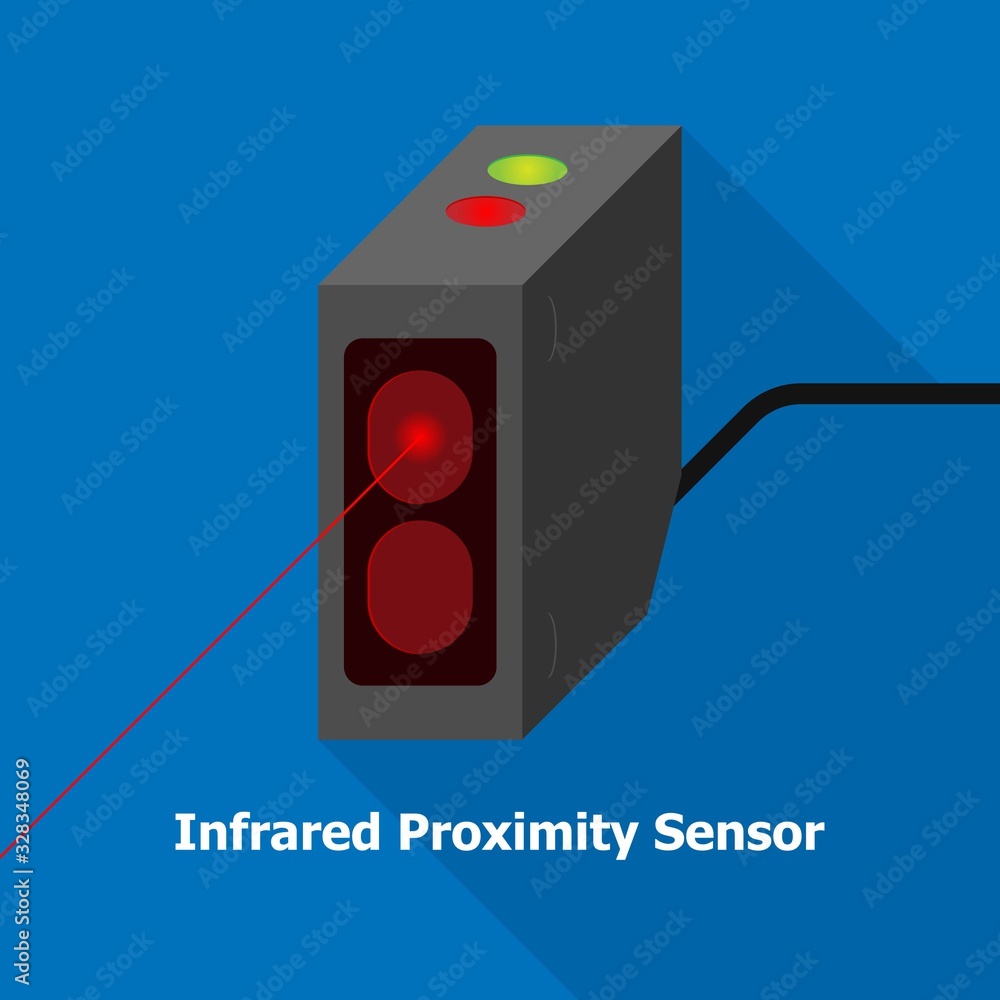
Infrared Proximity Sensors can be used for different types of applications like obstacle sensing, color detection, fire detection, line sensing, etc, and also as an encoder sensor. The sensor provides a digital output of 5v DC when there is an object in front of the sensor. Today in this tutorial we are going to show step by step how to interface this Infrared Proximity Sensor with Arduino

Understanding IR Distance Sensors: Proximity Detection and Applications Circuit Diagram
Security Systems: IR sensors can detect movement and trigger alarms in security applications. Industrial Automation: Factories use IR sensors for object counting, positioning, and proximity detection in conveyor systems. Smart Home Applications: IR sensors contribute to energy-efficient lighting systems that turn on/off based on occupancy Practical Applications of the Sharp IR Sensor. Now that you know how to use the Sharp IR sensor with Arduino, consider these practical applications: Obstacle-Avoiding Robot: Use the sensor to detect objects in the robot's path and steer it away. Touchless Door Opener: Automate doors to open when a person or object is detected within a certain